
Connecticut Unclaimed Money Search
Connecticut holds more than one billion dollars in unclaimed money. You can search today. The database covers all eight Connecticut counties. Banks, utilities, and businesses report forgotten funds to the Office of the State Treasurer. This unclaimed property includes inactive bank accounts, uncashed checks, forgotten utility deposits, stocks, bonds, insurance proceeds, and other assets that owners have forgotten or left behind over the years. State Treasury serves as the custodian of these funds until the rightful owners come forward. Searches cost nothing. Filing a claim is also free. Your funds never expire. There is no time limit for you to claim your property. Lost money waits. Find what belongs to you.
Connecticut Unclaimed Property Quick Facts
Where to Find Connecticut Unclaimed Money
The Office of the State Treasurer manages all unclaimed property in Connecticut. This office runs the CT Big List database at ctbiglist.gov. You can search this site anytime. The database lists names of people and businesses with unclaimed funds. You can search by last name, first name, city, or property ID. Results show the owner name, address, and property type.
Connecticut law requires banks, credit unions, and companies to report unclaimed assets to the state. This happens when there is no owner contact for three to five years. The Treasurer becomes the custodian of these funds. The state never takes ownership. Your money stays safe until you claim it. You can search for free. You can claim for free. Never pay a third party to search for you.
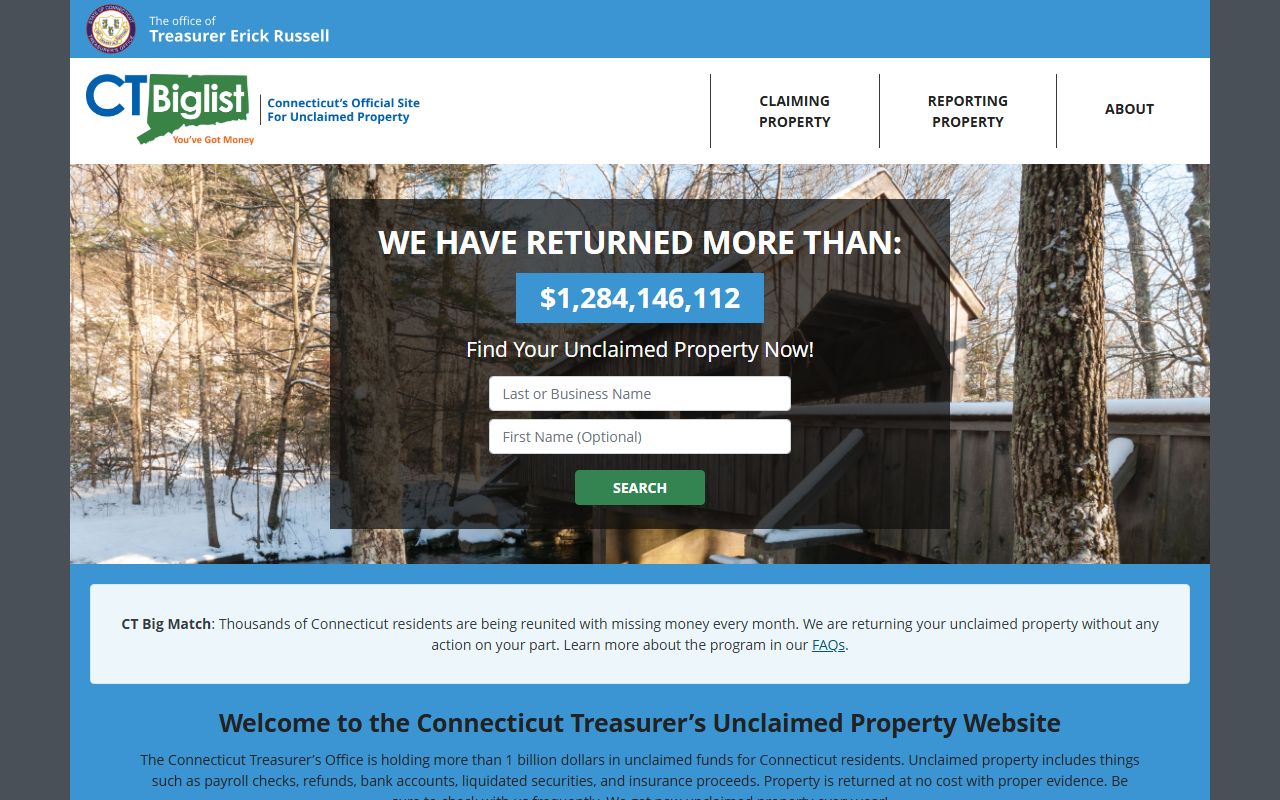
Note: Always use the official CT Big List website to search for unclaimed property in Connecticut.
What Is Connecticut Unclaimed Property
Unclaimed property is money that has been forgotten. It is not real estate. It includes bank accounts that sit idle. It includes uncashed checks and insurance proceeds. Stocks and bonds become unclaimed property too. Utility deposits and refunds join the list. Even virtual currency counts now under Connecticut law.
Property becomes unclaimed when the owner loses contact with the holder. This usually means no activity for three to five years. Banks must try to reach you before sending money to the state. They send letters to your last known address. Sometimes they use email. If you do not respond, the funds go to the Treasurer.
Common types of unclaimed property in Connecticut include:
- Inactive savings and checking accounts
- Uncashed payroll and refund checks
- Forgotten utility deposits
- Inactive stocks and bonds
- Life insurance policy proceeds
- Virtual currency holdings
The state holds these funds in the General Fund. But the Treasurer remains the custodian. You can claim your money at any time. There is no deadline. Even property from decades ago waits for the rightful owner.
CT Big Match Automatic Returns
Connecticut launched a new program in 2025. It is called CT Big Match. This program returns small amounts of unclaimed money automatically. You do not need to file a claim. The state matches property under $2,500 to verified sole owners. You get a notification letter first. Then a check arrives six to eight weeks later.
The program works by matching your name to your current address. The Treasurer verifies your identity through state records. If you qualify, the process is simple. You wait for the mail. The check comes to your door. This saves time for everyone. It reduces paperwork. It gets money back to owners faster.
If you receive a check from the Connecticut Treasurer, do not throw it away. Call 1-800-833-7318 if you have doubts. The staff can verify the check is real. This is a free service from the state. You earned this money. The state wants to return it.
How to Claim Unclaimed Money in Connecticut
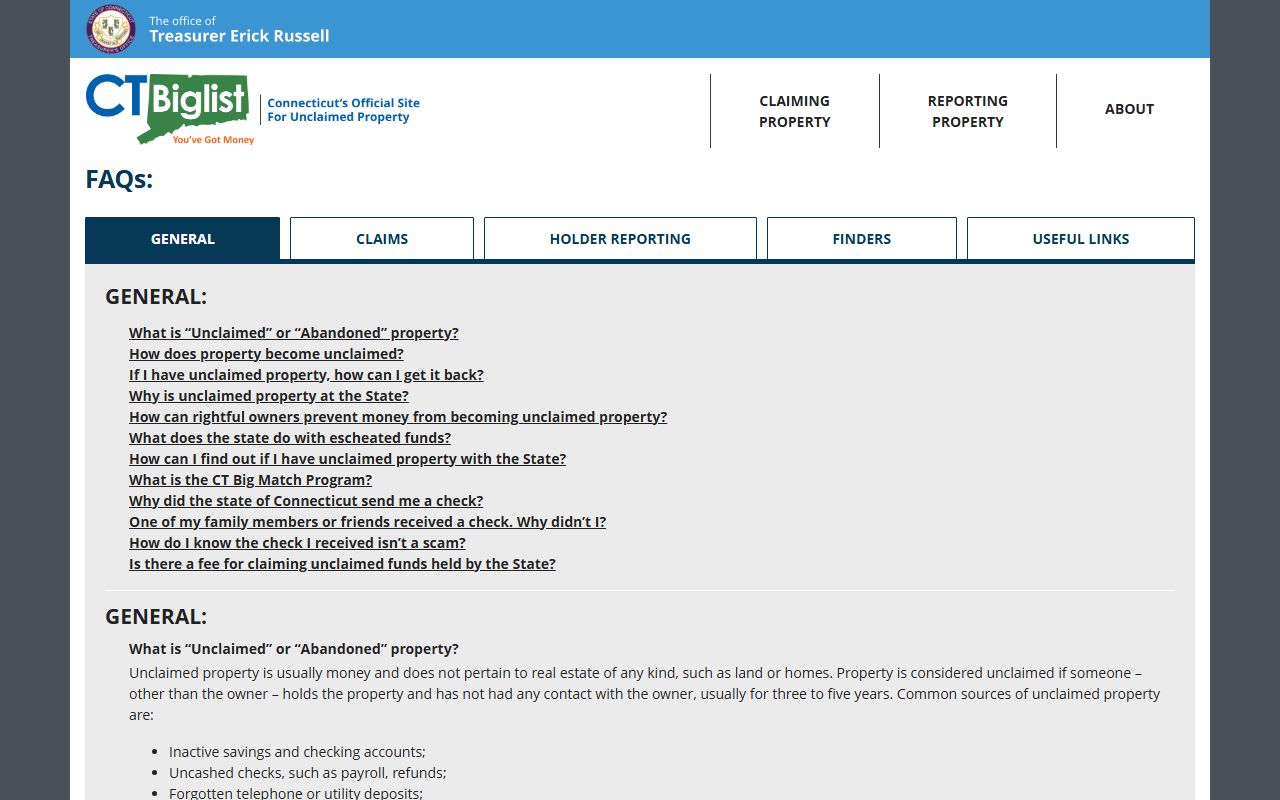
Filing a claim is easy. Start at ctbiglist.gov. Search for your name. Click on any property that belongs to you. Follow the prompts to start your claim. You will need to provide proof of identity. This includes a photo ID and Social Security number. You may need proof of address or ownership documents.
Claims can be filed online. This is the fastest way. You upload documents through the secure portal. You can also mail your claim. Send it to PO Box 5065, Hartford, CT 06102. Include the claim form and copies of your documents. Keep originals for your records.
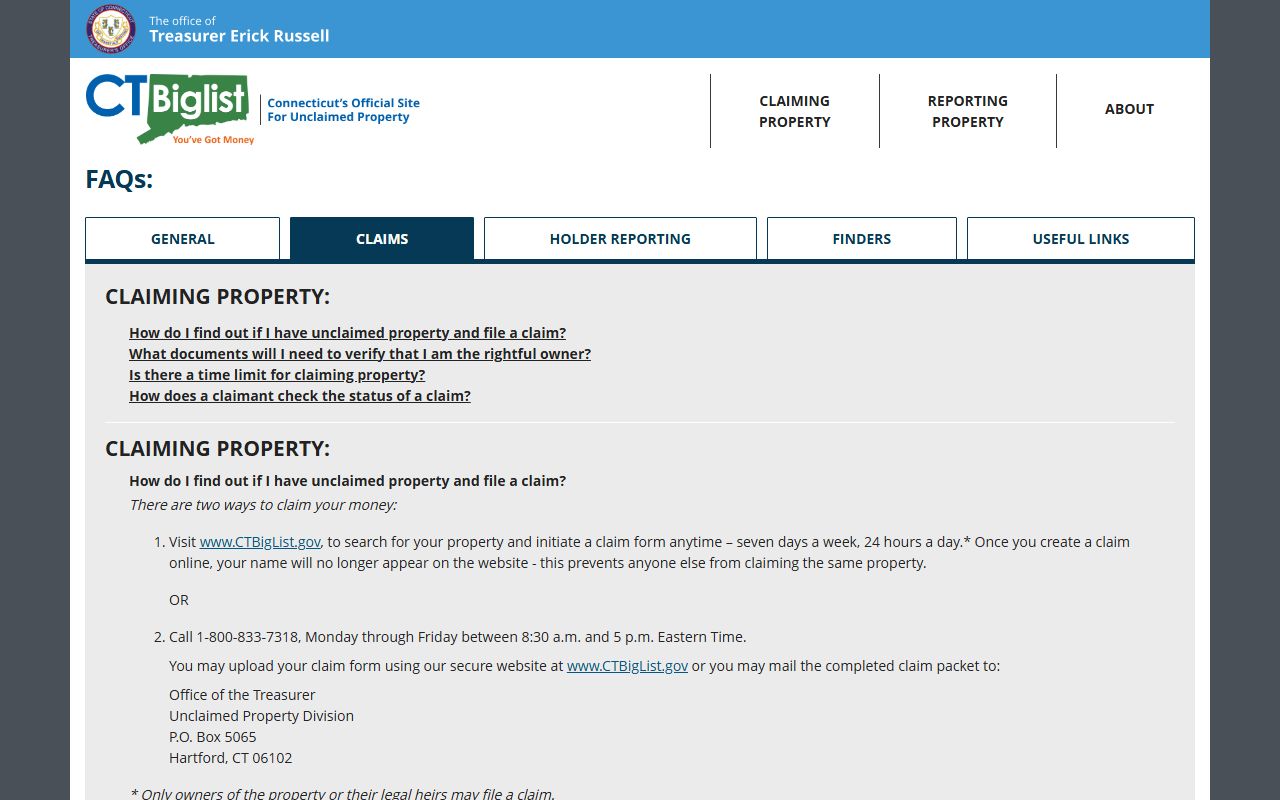
The Treasurer has ninety days to review your claim under Connecticut General Statutes Section 3-70a. Most claims process faster. You can check your claim status online. Use the Claim ID from your claim form. Enter it on the Check Claim Status page. You will see updates as your claim moves through review.
Once approved, you receive your money. There are no fees. The state does not charge for this service. Do not pay any company that offers to find your unclaimed property for a fee. You can do this yourself for free.
Documents Needed to Claim Property
You must prove you are the rightful owner. The state requires specific documents. A signed claim form starts the process. You need a photo ID. This can be a driver's license or passport. You need to verify your Social Security number. A Social Security card or tax document works.
Proof of address helps your claim. Bring a utility bill or bank statement. The address should match the property records. If you moved, bring proof of your old address. This connects you to the unclaimed funds. Some claims need more proof. You may need a tax return or original check. Each claim is different.
Heirs can claim property too. You need proof the owner died. A death certificate works. You need proof you are the legal heir. This might be a will or court order. The state works with heirs to return family money.
Note: Keep copies of everything you send. The state may request more documents. Respond quickly to avoid delays.
Connecticut Unclaimed Property Laws
Connecticut law governs unclaimed property. The main laws are in Chapter 32 of the General Statutes. These laws protect your rights. They ensure holders report property properly. They give you a clear path to claim what is yours.
Section 3-56 defines unclaimed property terms. Section 3-57a sets dormancy periods. Bank accounts become unclaimed after three years. Safe deposit boxes have a five-year period. Section 3-65a requires holders to notify owners between July and September before reporting.
Virtual currency is now covered under Section 3-57b. Holders must liquidate and send proceeds within thirty days. Wages become unclaimed after one year per Section 3-60b. Utility deposits share the same one-year rule under Section 3-60c.
Holder reports are due March 31 each year. Late reports face a fifteen percent interest penalty. The state maintains a public database per Section 3-66a. This lets you search for your property anytime.
Contact the Connecticut Unclaimed Property Division
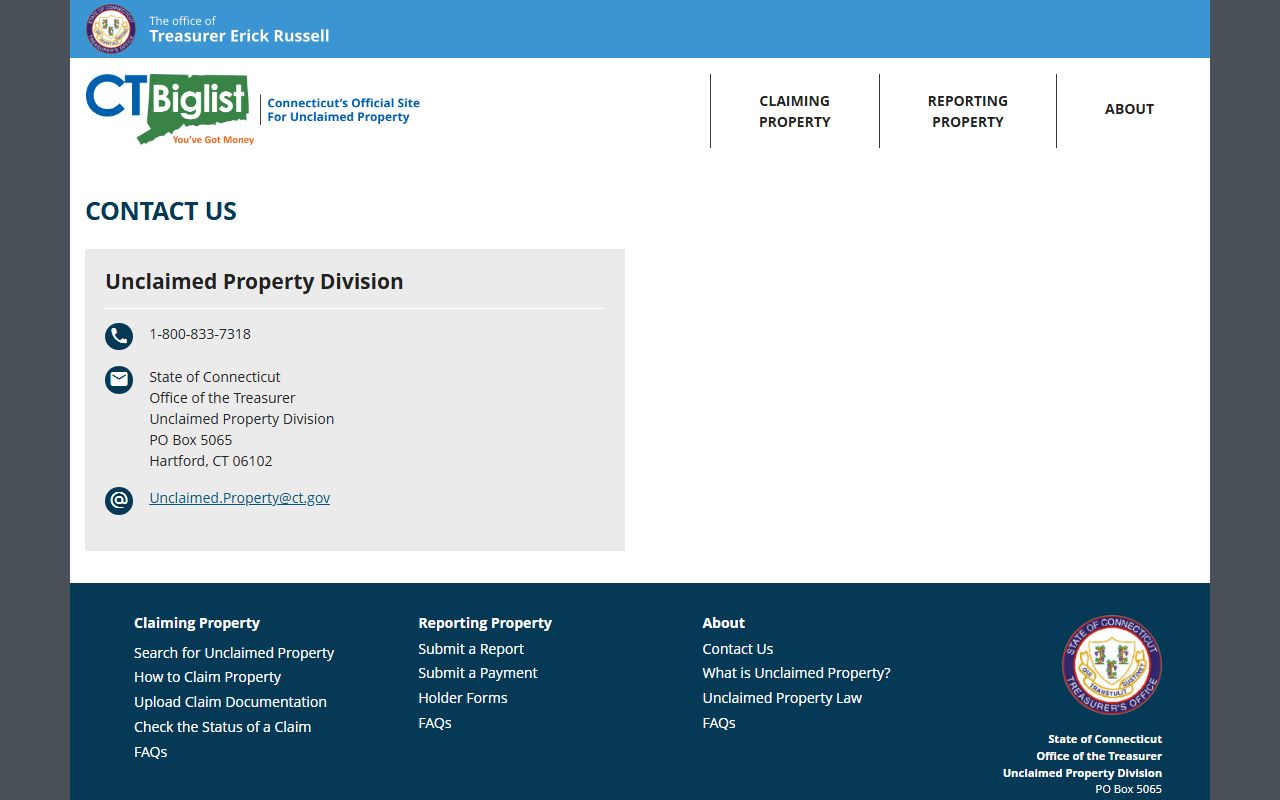
The Unclaimed Property Division stands ready to help. You can call toll-free at 1-800-833-7318. Staff answer calls Monday through Friday. Hours are 8:30 AM to 5:00 PM Eastern Time. They can search for you over the phone. They can answer questions about claims.
Email works too. Send questions to Unclaimed.Property@ct.gov. Include your name and phone number. Describe what you need. Staff typically respond within a few business days.
You can write to the office. The mailing address is Office of the State Treasurer, Unclaimed Property Division, PO Box 5065, Hartford, CT 06102. Send claim forms and documents here. Use certified mail for important papers.
The main State Treasurer office is at 165 Capitol Avenue, 2nd Floor, Hartford, CT 06106. Call (860) 702-3000 for general inquiries. The toll-free number is (800) 702-3000.
Preventing Unclaimed Property
You can take steps to keep your money from becoming unclaimed. Keep good financial records. Know where your accounts are. Cash all checks promptly. Do not let checks sit in drawers.
Stay in touch with your banks. Contact them at least once a year. Update your address when you move. Tell every bank and company where you do business. Check your accounts regularly. Look for statements and notices.
Tell family members about your accounts. They should know where to find your records. This helps if something happens to you. Planning prevents property from becoming lost.
Note: A little attention goes a long way. Active accounts never become unclaimed property.
Browse Connecticut Unclaimed Money by County
Connecticut has eight counties. All use the same state database. Select your county to learn more about unclaimed property in that region.
Unclaimed Money in Major Connecticut Cities
Residents of Connecticut cities can all search the same state database. Choose your city to find local resources and information.